
What Is a Bus Passenger Counter and How Does It Work?
Public transportation operators are under increasing pressure to improve service quality, optimize routes and manage passenger demand more efficiently. Accurate passenger data has become one of the most valuable assets for transit agencies and fleet operators.
This is why Bus Passenger Counter systems, also known as Automatic Passenger Counting (APC) systems, are becoming a standard technology in modern public transportation fleets.
Passenger counting systems provide accurate data about how many passengers enter and exit a vehicle, helping transportation operators make smarter decisions based on real-world usage patterns.
In this article, we explain what a bus passenger counter is, how it works, its key benefits and why it is becoming essential for modern transit operations.
What Is a Bus Passenger Counter?
A bus passenger counter is an electronic system that automatically counts passengers boarding and leaving a vehicle.
The system records passenger flow data without requiring manual counting by drivers or staff.
Passenger counting technology is widely used in:
-
Public transit buses
-
School buses
-
Airport shuttle buses
-
Employee transportation fleets
-
Intercity coaches
-
Smart city transportation systems
The collected data helps operators better understand passenger demand and improve operational efficiency.
Why Passenger Counting Matters
For many transportation operators, route planning has traditionally relied on estimates and manual observations.
This often creates problems such as:
-
Overcrowded buses
-
Underutilized routes
-
Inefficient scheduling
-
Increased operating costs
-
Poor passenger experience
Accurate passenger counting allows operators to make data-driven decisions.
Instead of guessing, transportation managers can see exactly how many passengers are using each route, stop and vehicle.
How Does a Bus Passenger Counter Work?
Modern passenger counting systems use advanced sensors and AI algorithms to detect people entering and leaving a vehicle.
The most common technologies include:
-
Infrared sensors
-
Stereo vision cameras
-
3D imaging sensors
-
AI video analytics
These systems are typically installed above vehicle doors.
When passengers pass through the doorway, the system automatically records boarding and alighting activity.
The data is then transmitted to fleet management software for reporting and analysis.
Types of Passenger Counting Technologies
Different technologies offer varying levels of accuracy and functionality.
Infrared Passenger Counters
Infrared systems use beams of light to detect movement through a doorway.
Advantages:
-
Lower cost
-
Simple installation
-
Reliable basic counting
Limitations:
-
Lower accuracy in crowded conditions
-
Difficulty distinguishing multiple passengers moving together
Stereo Vision Passenger Counters
Stereo vision systems use dual cameras to create depth information.
Advantages:
-
Higher accuracy
-
Better performance in crowded environments
-
Ability to distinguish individual passengers
These systems are commonly used in modern public transportation fleets.
3D Passenger Counting Systems
3D passenger counters represent the most advanced technology currently available.
Benefits include:
-
High counting accuracy
-
Real-time passenger statistics
-
Improved performance under varying lighting conditions
-
Better detection of passenger movement patterns
Many smart transportation projects now use 3D counting technology.
AI-Powered Passenger Counting Systems
Artificial intelligence is transforming passenger counting technology.
AI-based systems can:
-
Distinguish passengers from objects
-
Reduce counting errors
-
Improve reporting accuracy
-
Analyze passenger flow trends
These systems provide significantly more reliable data than traditional counting methods.
Key Benefits of Bus Passenger Counter Systems
Accurate Passenger Data
Accurate data is essential for effective transportation planning.
Passenger counters provide detailed information about:
-
Boarding numbers
-
Alighting numbers
-
Occupancy levels
-
Peak travel times
-
Route performance
This information helps operators allocate resources more efficiently.
Improved Route Optimization
One of the biggest advantages of passenger counting technology is route optimization.
Operators can identify:
-
High-demand routes
-
Low-demand routes
-
Peak operating periods
-
Underperforming services
This enables better scheduling and fleet utilization.
Reduced Operating Costs
Transportation companies can reduce costs by matching vehicle capacity with passenger demand.
Benefits include:
-
Reduced fuel consumption
-
Lower operating expenses
-
Improved vehicle utilization
-
Better workforce planning
Data-driven decisions help maximize efficiency.
Better Passenger Experience
Passenger counting systems help prevent overcrowding and improve service reliability.
Passengers benefit from:
-
Shorter waiting times
-
Improved comfort
-
Better route availability
-
More reliable transportation services
Improved customer satisfaction often leads to increased ridership.
Smart City Integration
Passenger counting systems play an important role in smart city transportation initiatives.
Data collected from vehicles can be integrated into:
-
Smart traffic management systems
-
Urban planning platforms
-
Public transportation analytics
-
Government transportation databases
This supports long-term transportation planning and infrastructure development.
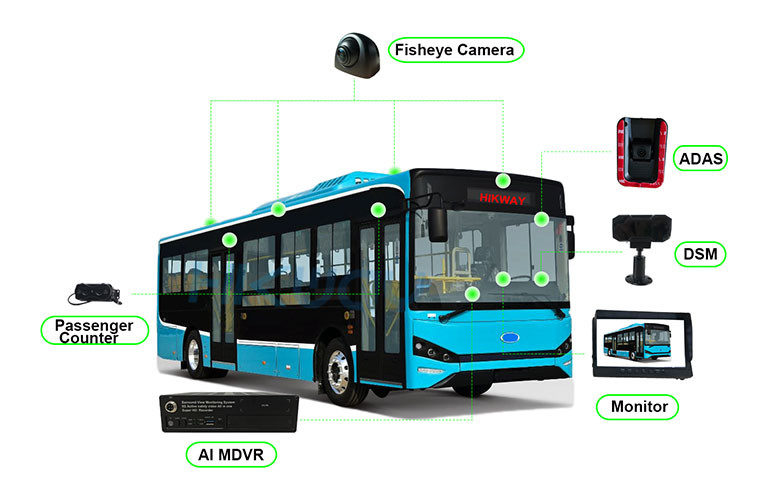
How Passenger Counter Systems Integrate with Fleet Management
Modern passenger counting systems are often integrated with:
-
Mobile DVR systems
-
GPS tracking platforms
-
Fleet management software
-
Video surveillance systems
By combining passenger data with vehicle location information, operators gain a complete view of fleet performance.
This integration improves operational visibility and reporting accuracy.
Learn more about transit fleet solutions:
Internal Link:
https://mdvronline.com/transit-bus/
Passenger Counters and Video Surveillance Systems
Many transportation operators now combine passenger counters with onboard surveillance systems.
Benefits include:
-
Passenger verification
-
Security monitoring
-
Incident investigation
-
Occupancy validation
Integrated systems provide both statistical data and video evidence when required.
Advanced fleet solutions often combine:
-
Mobile DVR
-
Passenger counting
-
GPS tracking
-
AI analytics
into a single platform.
Common Applications of Passenger Counting Systems
Passenger counting technology is widely used across multiple transportation sectors.
Public Transit Buses
Transit agencies use passenger counters to improve route planning and scheduling.
School Transportation
School districts use passenger counting to monitor student transportation activity.
Airport Shuttle Services
Airport operators use passenger data to optimize shuttle frequency and vehicle allocation.
Employee Transportation
Large companies use passenger counting systems to improve workforce transportation efficiency.
Smart Transportation Projects
Governments increasingly deploy APC systems as part of broader smart city initiatives.
Choosing the Right Bus Passenger Counter System
When selecting a passenger counting solution, operators should evaluate:
Counting Accuracy
Accuracy should exceed 95% under normal operating conditions.
Integration Capabilities
The system should integrate with:
-
Mobile DVR
-
GPS platforms
-
Fleet management software
Real-Time Reporting
Live reporting enables faster operational decisions.
Scalability
The platform should support future fleet expansion.
Reliability
Transportation environments require industrial-grade hardware capable of long-term operation.
Future Trends in Passenger Counting Technology
Passenger counting technology continues to evolve.
Future developments include:
-
AI-powered analytics
-
Cloud reporting platforms
-
Predictive passenger demand forecasting
-
Smart city integration
-
Real-time occupancy monitoring
As public transportation becomes more data-driven, passenger counting systems will become even more valuable.
Conclusion
Passenger counting systems have become a critical technology for modern transportation operators.
By providing accurate passenger data, these systems help improve:
-
Route planning
-
Fleet efficiency
-
Passenger experience
-
Operational decision-making
Combined with GPS tracking, mobile DVR systems and AI analytics, passenger counters are helping build the future of smart transportation.
For transit operators seeking greater operational visibility and efficiency, automatic passenger counting technology is a worthwhile investment.
Frequently Asked Questions
What is a bus passenger counter?
A bus passenger counter is an automated system that records the number of passengers entering and leaving a vehicle.
How accurate are passenger counting systems?
Modern 3D and AI-based passenger counters typically achieve accuracy rates above 95%.
Where are passenger counters installed?
Most systems are installed above vehicle doors to monitor boarding and alighting activity.
Can passenger counters integrate with GPS tracking systems?
Yes. Many modern systems integrate with GPS tracking, mobile DVR and fleet management platforms.
Why do transit agencies use passenger counters?
Passenger counters help improve route planning, fleet utilization, operational efficiency and passenger service quality.
Looking for a Professional Passenger Counting Solution?
MDVR Online provides advanced passenger counting systems designed for public transportation fleets, school buses and smart transportation projects.
Learn more about our passenger counting solutions and fleet management technologies today.